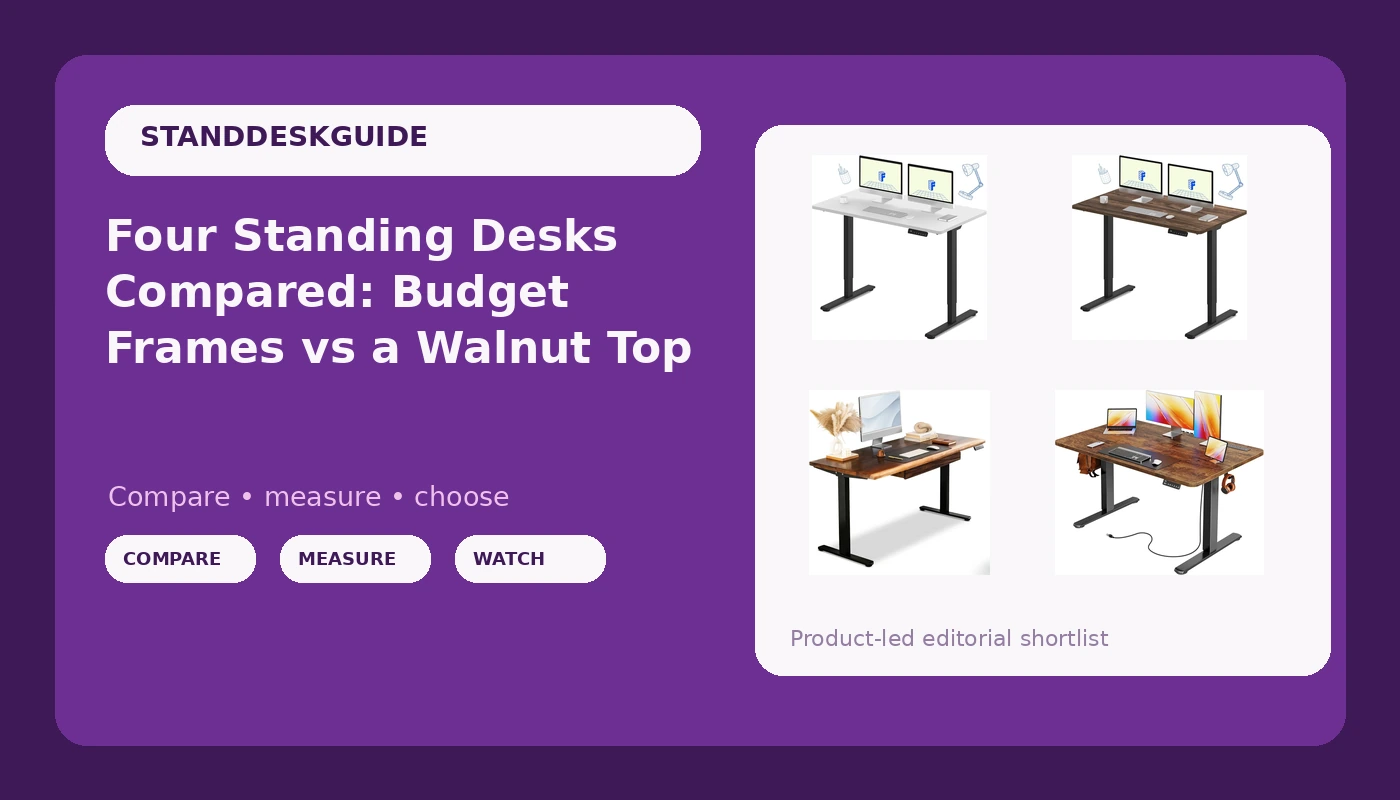
I built my first standing desk from a frame and a butcher block in 2016, then spent two years learning why it wobbled at exactly the height I needed and nowhere else. Since then I have designed furniture for a living and reviewed it on the side, and the questions I ask have not changed much. This electric standing desk comparison puts four very different answers side by side: a compact budget desk with power built into the top, two listings of the same mid-range dual-motor frame, and a live edge walnut desk with a drawer that costs more than the other three combined.
Related: Standing Desk Wobble: Why Cheap Frames Sway at Full Height
For most people reading this, the FLEXISPOT E3 is the pick, because it is the only desk here that advertises a dual-motor frame, and dual motors are the floor rather than the ceiling in 2026. The Huuger is the right desk for a tight corner where you want the smallest footprint and power built into the surface. The live edge walnut desk is for the person who has stopped pretending this is only about ergonomics.
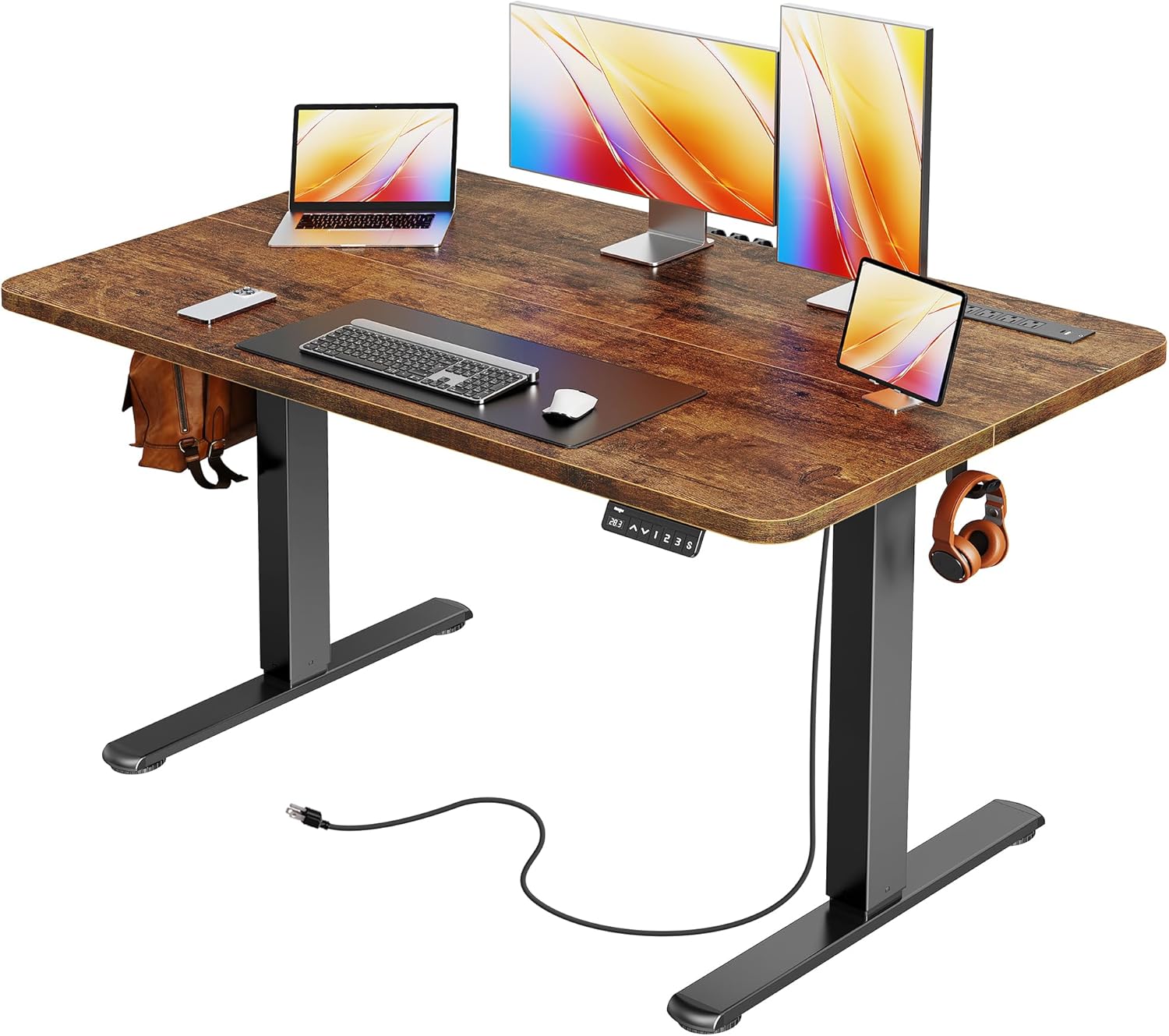
Huuger 47 X 24 Inch Electric Standing Desk with Power Outlets and USB-C Port
Lowest cost of entry here, and the only desk with outlets and a USB-C port built into the top
47 x 24 is the smallest work surface in this group, and the frame is not advertised as dual motor
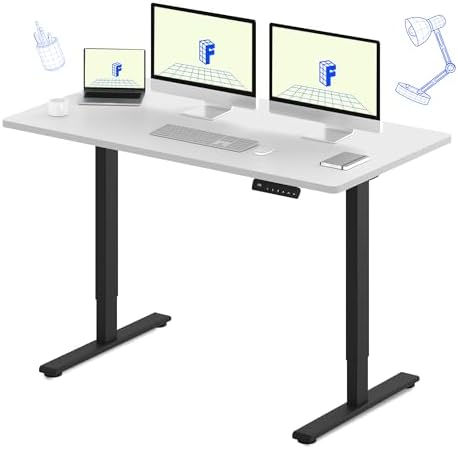
FLEXISPOT E3 Dual Motor Electric Standing Desk, 55 x 28 (listing one)
Advertises two lifting columns, and 55 x 28 is the depth I would actually work on all day
The higher of the two E3 listings shown here, and the identical model name makes the pair easy to confuse
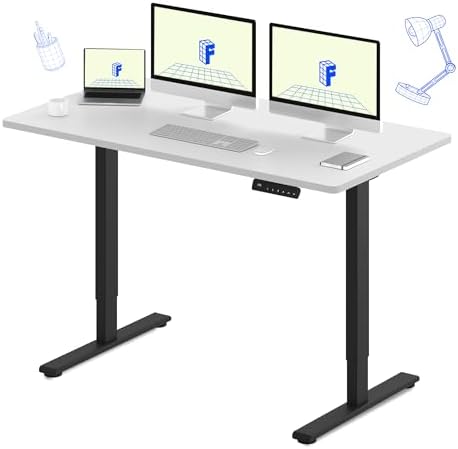
FLEXISPOT E3 Dual Motor Electric Standing Desk, 55 x 28 (listing two)
The same frame and top as the other E3 listing, at the lower of the two prices in this comparison
Identical name to the other listing, so you have to verify the finish and included parts before checkout
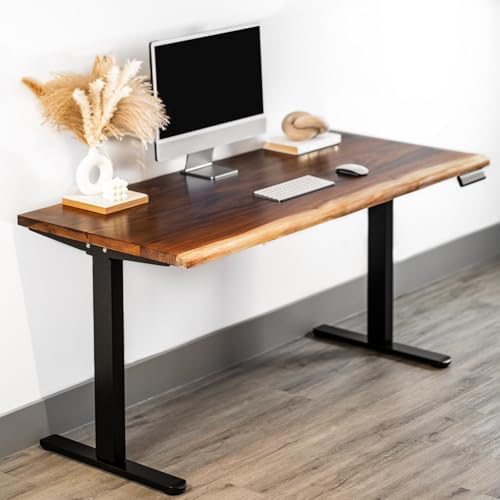
Live Edge Walnut Standing Desk with Drawer, 60x27
The only hardwood top here, and the only desk with a drawer to keep the surface clear
Costs more than the other three combined, and solid wood plus a moving drawer both demand care
Prices and availability were captured from Amazon Creators API and may change.
How I test a desk before it earns a recommendation
Every desk that reaches my bench goes through the same three week rotation, and nothing gets written up until it finishes. I set it up the way a normal person would, which means a monitor, a laptop, a mug, and a cable situation that starts tidy and degrades by Thursday. Then I run the same checks.
- Wobble at standing height. I raise the desk, put my hands on the front edge, and type the way I type when a deadline is close. Side to side sway is the number that matters, and it is almost always a geometry problem, not a weight problem.
- Motor behavior under load. Two columns lifting together is the minimum I will accept. One column working alone strains, sags, and quits early.
- The controller. Whatever it offers, it has to survive a power cut, stay readable, and respond on the first press. A desk you fight with is a desk you stop adjusting.
- Cable management. Where do the cables sit when the desk is down, and where do they go when it is up? If the answer is "they hang," the desk has a design problem.
The point of that list is simple. A desk can be cheap and pass, or expensive and fail. Price predicts the finish and the accessories. It does not predict stability.
The budget entry: Huuger 47 x 24 with built-in power
At the bottom of this group is a desk that solves a problem the others ignore. The Huuger top has power outlets and a USB-C port built in, so your laptop charger, monitor, and phone stop competing for the one wall outlet behind the desk. In a small apartment or a shared office, that is not a gimmick, it is the reason the desk works at all.
The trade-off is the surface. At 47 x 24 inches, this is the smallest top in the comparison, and 24 inches of depth fills up fast. A large monitor on a desk that shallow sits closer than some people like, and a clamp-on monitor arm eats into the usable depth even further. If you sketch, write on paper, or spread out reference material while you work, this is not the desk for you.
The second thing to check is the frame. The listing describes a stable steel frame, and steel is a good start, but the phrase I want to see is dual motor. Two lifting columns share the load and stay level with each other, and a single column doing all the work is where budget desks earn their reputation for sag. If you buy this one, treat the motor count as the spec worth confirming before checkout.
FLEXISPOT E3: one frame, two listings
The middle of this comparison is the most interesting part, because it is the same desk twice. Both listings carry the same name, the FLEXISPOT E3 Dual Motor Electric Standing Desk at 55 x 28, and both advertise the dual-motor frame the budget desk does not. The difference is the listing, not the model, and the two sit at different prices, with the second one lower at the time of writing.
That is worth understanding before you click. When a manufacturer runs two listings for one model, the gap is often a finish, a bundle, or a running promotion, and the name alone will not tell you which. Open both, compare the photos and the included parts, and buy the one that matches what you actually want.
What the E3 gets right is the size. 55 x 28 is the depth I would pick for a single monitor setup with room left for a keyboard, a notebook, and a mug that does not live on the edge. Those extra inches of depth change how a desk feels more than the width does, and they are the reason I would rather spend more here than buy the cheapest option in the group.
The dual motor claim is the part that matters most to me. Two columns moving together is the difference between a desk that holds its position under a load and a desk that slowly develops a lean. It is also why the controller deserves a test on day one: set your two heights, unplug the desk, plug it back in, and see what survived. If the memory does not hold, that is not a preference, it is a defect, and the return window is your friend.
The live edge walnut desk with a drawer
The most expensive desk here is also the only one made of wood you would notice. The top is live edge walnut at 60 x 27, which means the front edge follows the tree instead of a straight line, and no two tops look alike. The drawer is the other headline feature, and it solves a real problem: a place for a notebook, pens, and the small clutter that otherwise migrates across the surface.
This is the desk for someone who has decided the desk is furniture and not equipment. Walnut is a hardwood, it wants oil and wax rather than laminate cleaner, and it will show a ring if you leave a wet glass on it overnight. That is not a flaw, it is what solid wood does. If you want a surface you can wipe down without thinking about it, the laminate tops on the other three desks are the better answer.
Two things to verify before buying. First, the drawer: check how it is mounted and how it moves when the desk is at standing height, because a drawer that binds when the desk is up is a drawer you will stop opening. Second, the frame under the slab. A hardwood top at this price deserves a dual-motor frame, and the listing is where you confirm it. If the frame is not dual motor here, the money went into the wood, and you should decide whether that is what you wanted.
Wobble is a geometry problem
The most useful thing I know about desks is that wobble is a triangle problem. A desk is a rectangle standing on two legs. Push the front edge and the whole thing wants to fold into a parallelogram. The taller you go, the longer the lever, and the more that fold shows up as sway.
That is why a crossbar matters. A horizontal brace under the top turns the open rectangle into two triangles, and triangles do not fold. It is also why carpet is worse than hardwood, why a heavier top helps more than a heavier frame, and why a desk can feel rock solid at sitting height and unnerving at standing height without anything being broken.
So when you compare these four, compare the frame geometry first and the top last. The frame is the desk. Tops are interchangeable, and the one that ships in the box is rarely the one you would choose if you were buying separately.
Controllers, presets, and the features you actually use
Here is the unpopular opinion: the controller matters more than the motor for daily satisfaction. A dual-motor frame with a controller that forgets its presets, dims to unreadable, or needs a long press to wake up will get adjusted twice a week and then never again. A cheaper frame with a controller that remembers two heights and responds on the first press gets used every day.
Memory presets are the feature people dismiss as a gimmick and then quietly rely on. Sit height and stand height are two different settings, and if you have to hold a button and watch a number climb every single time, you will stop standing. Test the controller before the return window closes. It is the cheapest test you can run and the most predictive.
What you give up as the price climbs
The pattern across these four is not more money, more stability. It is more money, more surface, more material, and more parts that can fail.
The budget desk gives you a compact top, integrated power, and the lowest cost of entry. What you give up is depth and, most likely, the second motor. The E3 listings give you a 55 x 28 top and an advertised dual-motor frame, and what you give up is money and the simplicity of a single listing. The walnut desk gives you a 60 x 27 hardwood top and a drawer, and what you give up is the freedom to treat the surface carelessly and the option of replacing one cheap part instead of a whole desk.
Which one should you buy?
If space is tight and budget is the constraint, the Huuger is a defensible buy, provided the frame is dual motor and you accept a 47 x 24 surface. If you work at the desk for a living, the FLEXISPOT E3 is the pick in this group, and I would compare both listings before choosing. If you want the desk to be the best looking object in the room and you are willing to oil it twice a year, the live edge walnut desk earns its price, and I would still confirm the frame under the wood before checkout.
This is a home office comparison, not a conference room comparison, and the priorities are different. Buy for the frame, then for the surface, then for the accessories. In that order, none of these four is a mistake.
What I am testing next
The sub-$300 dual-motor frame market is the one I am watching. The gap between the cheapest frame that survives a loaded wobble test and the most expensive one keeps narrowing, and that should worry anyone selling a premium desk on brand reputation alone. The next round of notes covers crossbar geometry across three frame designs, and I will publish the wobble results whether or not they flatter the brands involved.
Also on the bench: a cable tray comparison, because I have spent more on cable management than on some of the desks it serves, and I would like to know whether any of it was worth it.