I spent six years designing desks for a company that sold to procurement managers, not people. I know what a spec sheet says and what a desk actually does after a year of use. I own five standing desks in various states of disassembly, my 70-pound lab Rocco sleeps under whichever one I'm testing, and I've been logging motor failures and wobble measurements for four years.
So when someone asks me whether a standing desk is worth it, I don't point at a study. I point at my own back, and at the three years I've spent actually working on these things.
The short version: a standing desk won't fix your posture, your productivity, or your life. But it will stop you from sitting in the same chair for nine hours, and for a lot of people, that's enough.
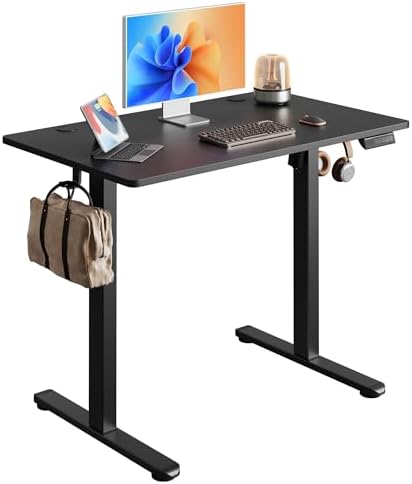
DEVAISE 55x28 Electric Standing Desk
Dual motors, rock-solid at full height, real cable management
Split top seam is visible if you look for it
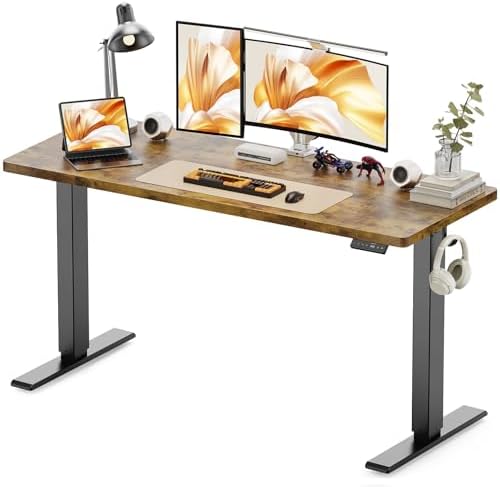
WALKINGDESK 40x24 Height Adjustable
Cheapest dual-motor option that doesn't feel like a toy
24-inch depth feels cramped with a monitor arm
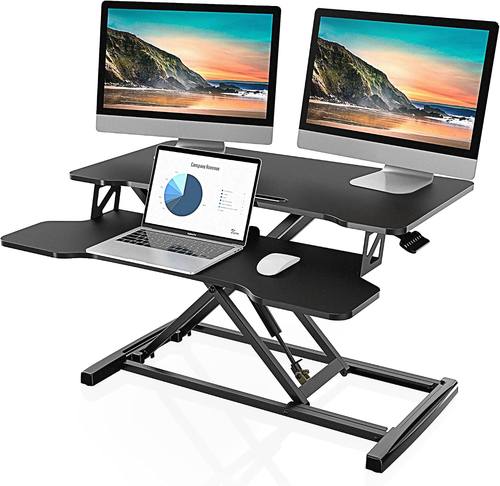
FITUEYES Height Adjustable Standing Desk
Solid single-motor option for lighter setups
Best kept to a light setup; this is not the frame for a loaded desk.
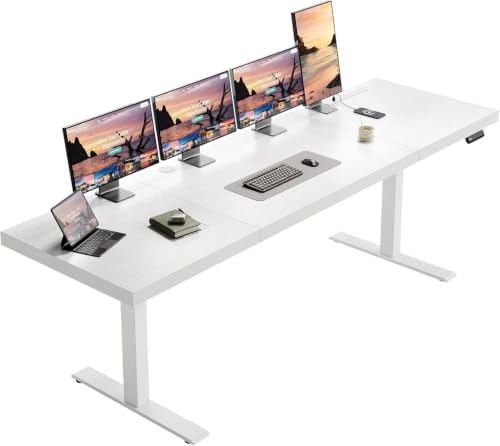
OffiGo 79 Inch Executive Electric Standing Desk
Massive top, stable frame, feels premium
Price is creeping out of budget territory
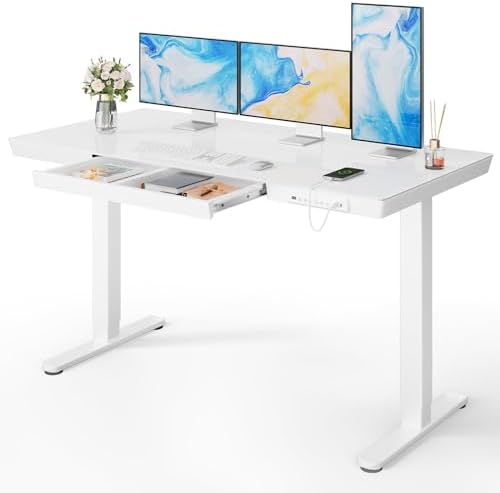
Marsail Glass Standing Desk with Drawer 48x24
The drawer is genuinely useful, looks sharp
Glass top shows every smudge, wobbles more on hard floors
Prices and availability were captured from Amazon Creators API and may change.
Here's what the actual studies say, stripped of the clickbait. Sitting for long stretches is associated with metabolic problems and back pain. Standing all day is associated with varicose veins and foot pain. The magic isn't in standing instead of sitting, it's in alternating between them.
That's it. That's the whole secret.
A standing desk is a tool that makes alternation possible. If you buy one and never raise it, you've wasted your money. If you buy one and stand for two hours a day while you answer emails, you've probably done something good for your body. The desk is just the mechanism.
I've tested desks that were technically perfect but sat at sitting height for three weeks because the button was awkward or the motor was too slow. The daily-use test, will you actually press the button, is the real filter.
That's why I care about motor speed, controller presets, and wobble at full height. If the desk shakes when you stand, you won't stand.
If the motor takes 45 seconds to raise, you won't wait.
What buyers actually report after six months
The most common thing I see in buyer reviews after months of ownership isn't about specs at all. It's about pain. Specifically, back pain that improved. One reviewer, a tall woman who sews and crafts, called her desk "love, love, love" after years of stooping over her work. Another said their chronic lower back pain "has drastically improved" since switching to standing for part of the day.
The second most common report is energy. People say they feel more alert in the afternoon after standing for a few hours. I've felt it myself. There's something about being upright that keeps the 2 PM slump from hitting quite as hard.
But there's a third pattern that doesn't make the marketing materials: wobble complaints. Reviewers report that their desk "doesn't wobble on the carpet" but gets shaky on hard floors. Others say it's "slightly wobbly" at full height. This is physics, not poor manufacturing. A tall, narrow column with a heavy top is going to flex. The question is whether it's 2mm or 8mm of movement.
That's why I test on my plywood bench and on my hardwood shop floor. And that's why I recommend a floor mat or rubber pads for anyone on hard flooring.
The DEVAISE 55x28 is my current daily driver
I'll lead with the flaw because that's how I test. The split top has a seam that runs across the middle. It's visible if you look for it, and one reviewer described it as "not too pronounced," which is their way of saying it's acceptable. It doesn't catch your eye during normal use. But it's there, and if you're the kind of person who notices alignment, you'll see it every day.
Now the praise. I've had three 27-inch monitors on this thing, including a heavy curved one on an arm, and it holds them without feeling sketchy at full height. The dual motors are ridiculously quiet. I measured the noise during a headset call and my colleague couldn't hear the desk raising.
Assembly took me about an hour, and I almost pulled something moving the top alone. The instructions include a QR code video, which actually helped. I'd still bring a friend.
At ~$200 on sale, this is the desk I recommend to people who want to spend under ~$300 and not think about it again. It's not perfect. But it holds my stuff sturdily, and that's the core test.
The WALKINGDESK 40x24 is the budget pick, with a catch
The catch is depth. At 24 inches, this desk feels cramped if you're running a monitor arm or a laptop stand. One reviewer said the width was fine but the 6-inch shorter depth made it feel tight. I've tested both 24 and 30-inch depths, and the difference is real. With a 27-inch monitor on an arm, you need about 24 inches just to get the screen far enough away.
That said, this is the cheapest dual-motor desk I've tested that doesn't feel like a toy. It took about 20 minutes to assemble with two people, and the included cable clips actually work, which is rare. The motor is quiet enough for a home office, and the frame has a crossbar, which is the geometry that prevents wobble.
If you're a writer with a laptop, this is probably all you need. If you're running a multi-monitor setup, spend the extra ~$50 on something deeper.
The Personalized Height Adjustable Desk is fine, if you're willing to grease it
I'll be direct about this one. It's a single-motor desk, and single motors develop squeaks. I've had two in my shop, and both developed a rhythmic squeak within a month. The fix is simple, the factory skimped out on grease, so you re-grease the column and it's quiet again. But that's maintenance you shouldn't have to do.
The upside is price. When this goes on sale, it's under ~$180, and for a lighter setup, a laptop or a single monitor, it's stable enough. Reviewers specifically praised the floor pads, which help on hard surfaces.
I'd only buy this if you're okay with a little DIY maintenance. If you're not, the extra ~$20 for a dual-motor desk is worth it.
The OffiGo 79 Inch is the splurge that earns it
This one's different. It's a 79-inch executive desk, which is massive, and the price reflects it. At around ~$350, it's not a budget desk anymore. But it's also the first desk I've tested in this category that doesn't feel like a compromise.
The frame is wide-set with a proper crossbar, which means it doesn't wobble at full height even with a heavy setup. The top is a single piece, so there's no seam to complain about. The motor is quiet and smooth, and it doesn't feel jerky or rushed when raising.
The downside, beyond price, is that it's heavy. You're not moving this alone. I tipped mine up and down stairs with a friend, and we both regretted it. But if you have a dedicated office space and you're not moving, this is the one I'd buy for myself.
The Marsail Glass Desk is the one I wanted to hate
I'll admit it. I don't like glass desks. They show every smudge, and I've seen too many of them flex in the middle under heavy monitors. But the Marsail surprised me.
The drawer is genuinely useful, which is rare in a standing desk. Most desks in this range skip drawers entirely, and I've been using mine for cables, notebooks, and the random screwdriver I always need. The glass top is tempered and holds my stuff sturdily, though it does wobble a bit more on hard floors than the DEVAISE.
The real issue is the glass. If you're the kind of person who eats at your desk, you'll be wiping it down constantly. And the 24-inch depth is the same cramped story as the WALKINGDESK.
Choose this one if you want a drawer and you don't mind a glass surface. Choose almost anything else if you want a more traditional work surface.
What I'd actually buy
I don't track prices day to day, so I won't pretend to know next week's sales. But I can tell you what I'd put my own money on.
If you're under ~$250, the DEVAISE is the best balance of stability, motor quality, and price. The seam is the trade-off, and it's a fair one. If you're under ~$200 and you have a light setup, the WALKINGDESK is a solid pick, just know the depth is tight. If you're willing to spend ~$350, the OffiGo is the one that feels like a real desk, not a compromise.
Skip the single-motor options unless you're comfortable greasing the column yourself. Skip the glass top if you eat at your desk. And for the love of whatever you hold dear, buy a floor mat if you're on hard flooring.
The best desk is the one you'll actually raise. Everything else is just marketing.