I spent six years designing office furniture and four more reviewing standing desks on a channel nobody ever monetized, and the same question keeps arriving: do you buy a full electric frame, or work with what you already own? This height adjustable desk comparison answers that with four genuinely different products, a tabletop converter, a pneumatic rolling table, and two full-size electric desks. None of them are interchangeable, and the most common mistake I see is buying the wrong category and then comparing specs inside it.
Related: Standing Desk Wobble Tests Explained
The short answer: for a full-time workstation the COLAMY 55x28 dual motor desk is the one I would put in my own office, the Veken 63x28 is the wider-surface pick, the VIVO V Series converter is the cheapest way to try standing without replacing your furniture, and the GTPLAYER rolling desk is a different tool entirely, built for small rooms and laptop work.
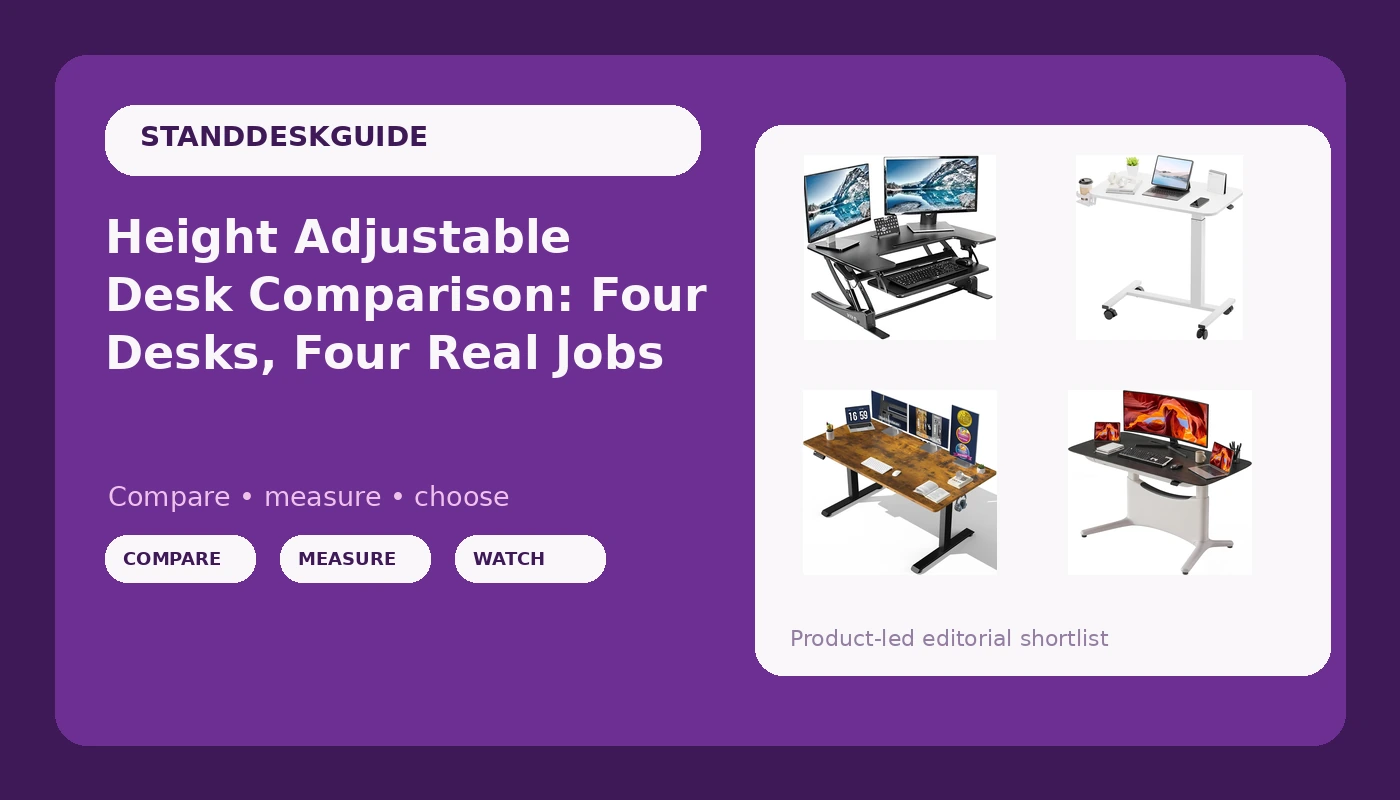
VIVO 36 inch Height Adjustable Stand Up Desk Converter, V Series
Cheapest route to standing height, no motor to fail, keeps the desk and drawers you already own
Eats desktop depth, no memory presets, and a converter is never as rigid as a real frame
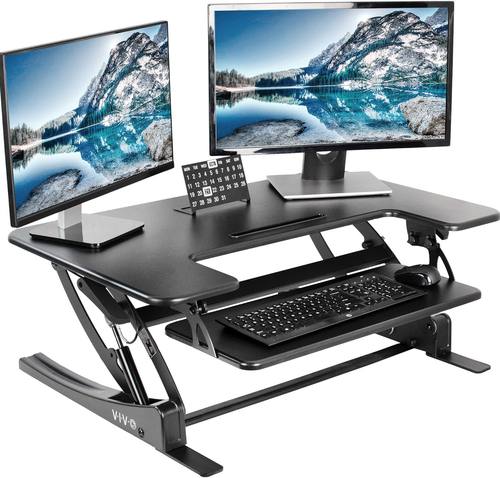
GTPLAYER Small Standing Desk with Wheels, Pneumatic Mobile Rolling Laptop Desk
Rolls where you need it, pneumatic lift means no controller and no cable, tiny footprint
28 by 16 inches is a laptop surface, casters shift under heavy typing, no presets
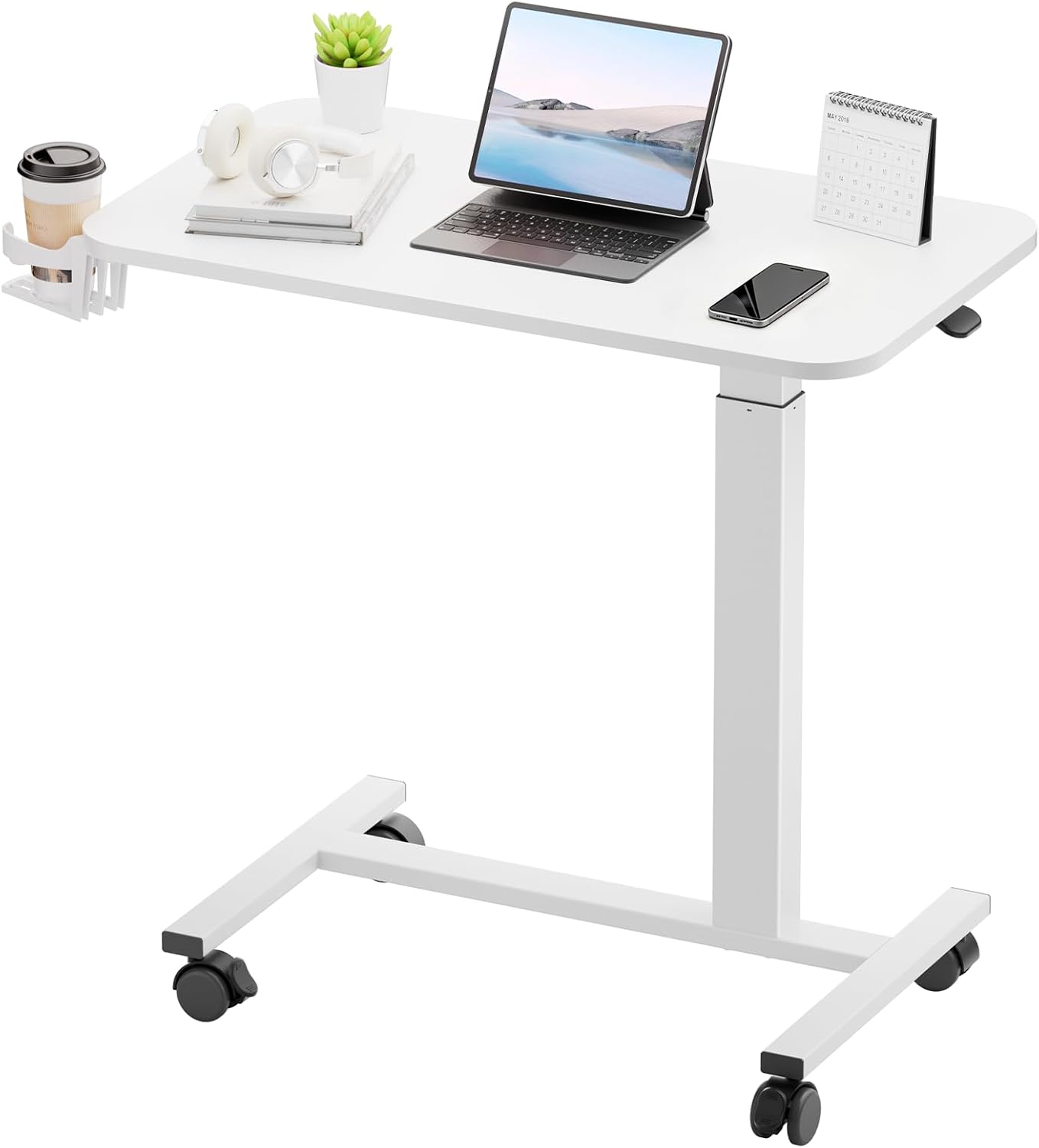
Veken 63"x28" Wider Large Standing Desk, Electric Height Adjustable
63 inches of width fits dual monitors plus a laptop, electric adjustment at the value end of this group
A wider top adds leverage at standing height, so feet and bracing matter more than the spec sheet admits
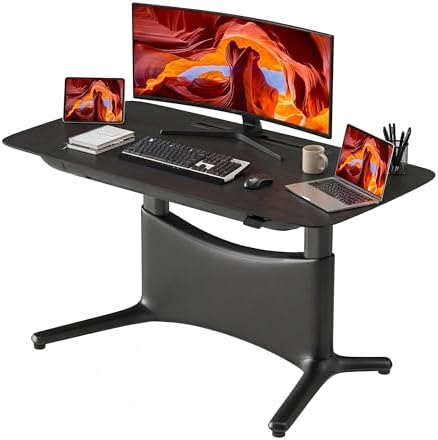
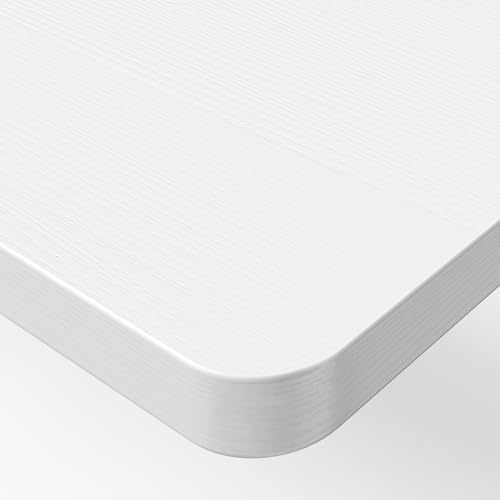
COLAMY Electric Standing Desk 55x28, Dual Motor with Drawers, Outlets & Footrest
Dual motor frame, integrated drawers and outlets, footrest, and a wobble-free claim the maker has to stand behind
Drawers cut under-desk clearance, the integrated power still needs a wall run, and it is the most expensive desk here
Prices and availability were captured from Amazon Creators API and may change.
How I judge a desk before I recommend it
Every desk I form an opinion on gets the same treatment: three weeks of daily use at both sitting and standing heights, a loaded wobble test at full height with real typing, a cable audit, and a log of what the controller does after a power cycle. That standard is exactly why this article sticks to what the design and the published specs tell you. I am not going to invent a decibel reading or a stability score for a desk I have not had on my own floor, and nobody else writing this kind of comparison should either.
I judge in this order: geometry, motor count, controller behavior, cable routing, then looks. Almost every disappointed standing desk owner I have talked to got that order backwards and started with the top.
Geometry is the whole game
Wobble is a triangle problem, not a weight problem. The frame is the hypotenuse: two lifting columns, a foot at each end, and on the honest designs a crossbar tying the columns together. Take away the crossbar and you have two tall posts bolted to a board, which is why cheap frames sway hardest at the exact height you actually want to work at.
Width changes the math. A 63 inch top on the same class of frame carries more leverage than a 55 inch top, and you feel it as a slow rock when you type hard. That is why the wider desk in this comparison deserves a harder look at its feet and bracing, not just praise for the surface area. If a manufacturer brags about width and says nothing about the frame, that tells you where the money went.
The VIVO V Series converter: the honest upgrade path
The VIVO V Series is a 36 inch tabletop converter with a dual monitor riser. It sits on the desk you already own and lifts your monitors and keyboard together so you can stand without replacing anything. For a lot of people that is the right first move: you keep your drawers, your finish, your filing, and your budget.
The trade-offs are structural. A converter consumes desktop depth, and the taller your monitor stack, the more depth it eats. It raises your work surface, but the surface underneath stays where it is, so your chair has somewhere to live and your knee room shrinks. And because there is no motor, there are no memory presets. You set the height by feel every single time, and that one detail decides whether you actually use the thing or quietly stop.
Who it fits: someone with a desk they like, a single or dual monitor setup, and a real question about whether they will stand at all.
The GTPLAYER rolling desk: small, pneumatic, and not pretending to be an office desk
The GTPLAYER is a 28 by 16 inch standing desk on wheels with a pneumatic lift. That is a laptop surface, not a workstation surface, and I mean that as a compliment. Pneumatic means no motor, no controller, no power cable, and nothing that can strand your desk halfway up. You pull the lever, the column moves, you let go, it holds.
The wheels are the point and also the compromise. A desk that rolls is a desk that shifts when you lean on it. On a hard floor with a laptop and a coffee, that is fine. Add a monitor arm and heavy typing and you will feel the casters move under your hands. This is a bedside table, a small-apartment desk, a machine for working from a recliner, and a secondary station. It is not the desk you build a decade on.
The two electric frames: Veken and COLAMY
These are the two desks here that solve the real problem: electric height adjustment with memory, at the push of a button.
The Veken is 63 by 28 inches in brown, and the width is its whole argument. Sixty-three inches is enough for two monitors and a laptop without stacking anything, and it keeps a proper keyboard and mouse zone in front of you instead of an arm's reach away. The catch with a wide top is leverage, as covered above. A wider top on the same frame class rocks more at standing height because the load sits further from the columns. When you look at the Veken, look at the feet and the bracing first, and treat the width as a benefit you have to earn rather than a free upgrade.
The COLAMY is 55 by 28 in oak white, and it is the only desk here with a dual motor, drawers, outlets, and a footrest. Dual motor is the minimum I will accept in 2026, because two columns share the load and stay in sync where a single motor strains and sags. The extras matter more than they sound. Drawers and integrated outlets are clutter and cable management solved in the same purchase, which is the part most people underestimate until they are zip-tying a power strip to a leg. The footrest is the detail that keeps your feet off the crossbar.
The trade-offs are real too. Drawers eat under-desk clearance, so if you are tall or you sit in a thick chair, measure that before you commit. Integrated outlets still need one cable run to the wall, and it has to have enough slack to survive the full travel of the desk. And it is the most expensive desk in this comparison, so it has to earn that with the frame, not the finish.
Motors, controllers, and the preset problem
A controller you fight with is a controller you stop using. The feature that decides this is memory presets, and the test is not whether they exist, it is whether they survive a power cut. I have owned desks that forget their presets every time the building browns out, and I stopped standing on them within a month. When yours arrives, set two heights, unplug it for a minute, plug it back in, and press the button. Five minutes of work, and it tells you more than any spec sheet.
Collision detection belongs in the same day-one test. Put a box under the desk, send it down, and watch whether it stops. Anti-collision that does not work is worse than none at all, because you trust it. The COLAMY is the desk here with the controller worth running this checklist on, and the Veken's electric column deserves the same treatment.
The converter and the rolling desk skip this entire section, which is a feature rather than a gap. Nothing to program, nothing to forget.
Cable management and the friction you will actually feel
Cable management is where desks quietly fail. A converter moves your monitors up and down, so every cable behind them needs slack to travel and a way to stay put, or you will be fishing a display cable out from behind the desk every week. A rolling desk with a laptop needs almost nothing, which is its own kind of cable management. Electric desks want a tray under the top, a slack loop to the wall, and one clean drop.
The COLAMY's drawers and outlets handle most of this in the box. Everything else here needs a tray and a roll of velcro, and I would budget for both before the desk arrives rather than after.
Who should buy which
Buy the VIVO V Series converter if you like your current desk, you run one or two monitors on a stand, and you want to find out whether standing is a habit you keep before you spend real money on a frame.
Buy the GTPLAYER rolling desk if your space is small, your work is a laptop, or you want a height-adjustable surface that can live beside a bed or a couch and roll out of the way.
Buy the Veken 63x28 if surface area is your constraint and you want an electric frame at the value end of this group. Check the feet and the bracing, and put the heaviest monitor in the middle.
Buy the COLAMY 55x28 if you want the desk to disappear into the routine: dual motor, presets, drawers, outlets, footrest, one purchase. Measure your under-desk clearance first.
What I am testing next
I have four budget dual-motor frames in rotation right now, a wobble meter, and three weeks of real work in each. The $250 frame market is getting dangerous in a good way, and I expect at least one of those desks to embarrass something that costs twice as much. When that round of testing closes, this comparison gets an update with numbers instead of geometry.
Until then, the table above is the honest version: what each desk is for, what it costs you in trade-offs, and where it will disappoint you. Prices move weekly, so every row says the same thing for a reason. Check current Amazon price before you commit.