I own a 72-inch Uplift V2 and a 60-inch V2 Commercial, and I've been swapping between them for the last month. The short version is that the V2 is the best overall for most people, but the Commercial's crossbar makes a real difference at full height if you're tall.
I've got a 70-pound lab mix named Rocco who sleeps under my test bench, and if the desk shakes enough to wake him, it fails.
Neither of these desks woke him. That's not the same as saying they're worth the price premium, because I've tested ~$469.99 desks that hold three monitors without a wobble.
Here's the honest breakdown.
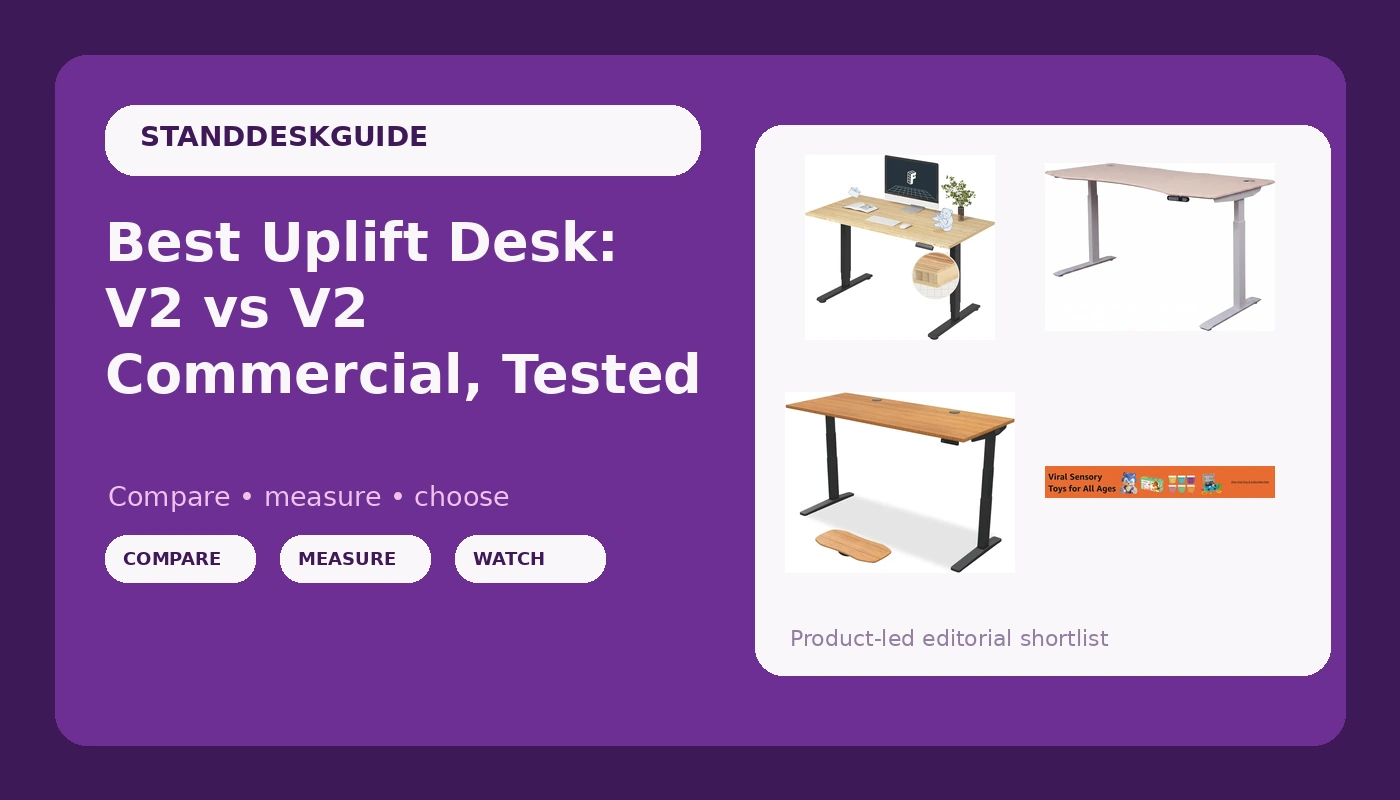
FlexiSpot E6 Bamboo 3-Stage Dual Motor Electric Standing Desk 55 x 28 Sit Stand Up Desk, Holds 220 lbs, Adjustable Height w/ Memory Presets, Solid Bamboo Desktop & Black Frame, Ships in 2 Boxes
Best overall balance of stability, finish, and warranty
Visit on Amazon →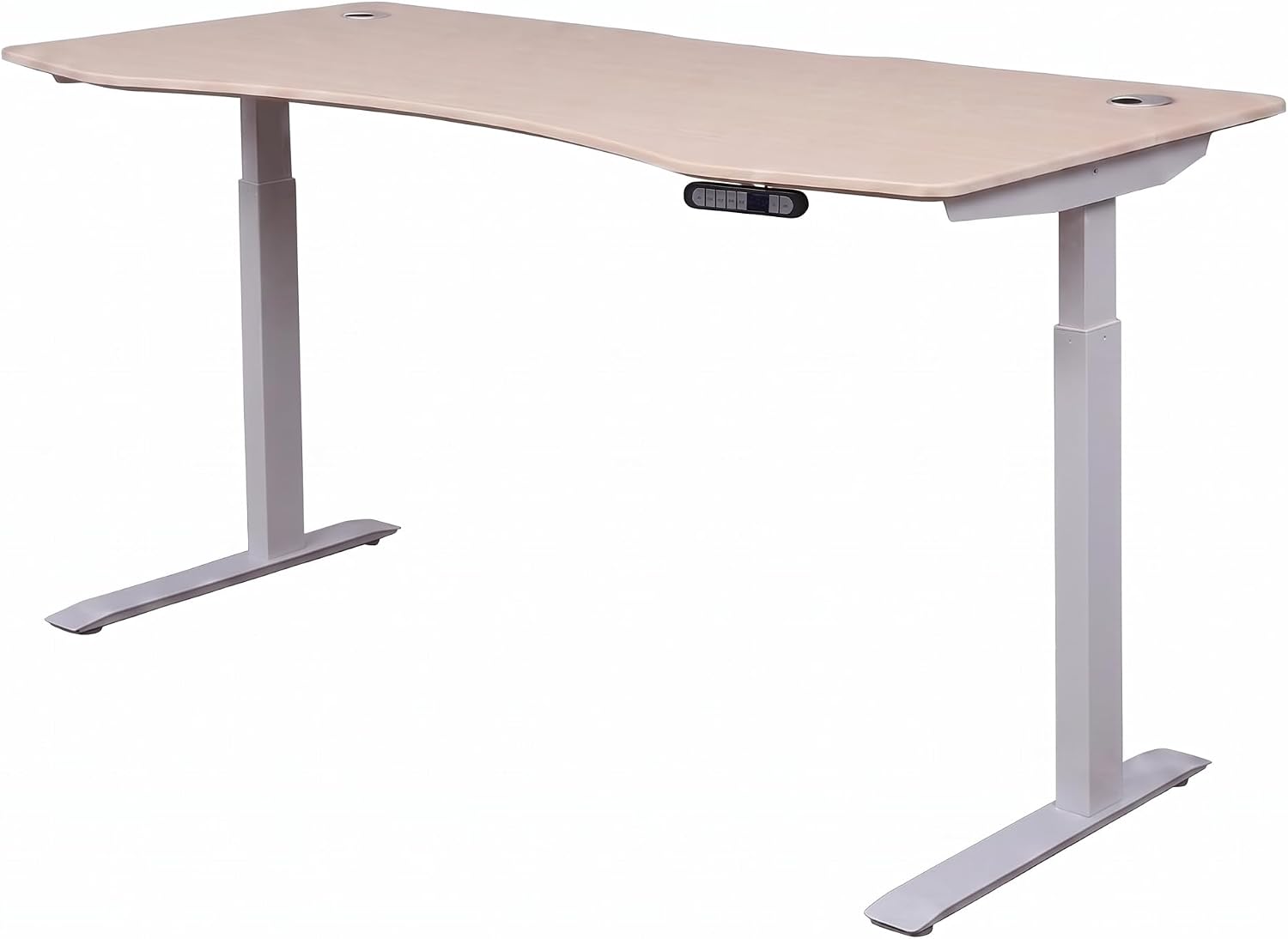
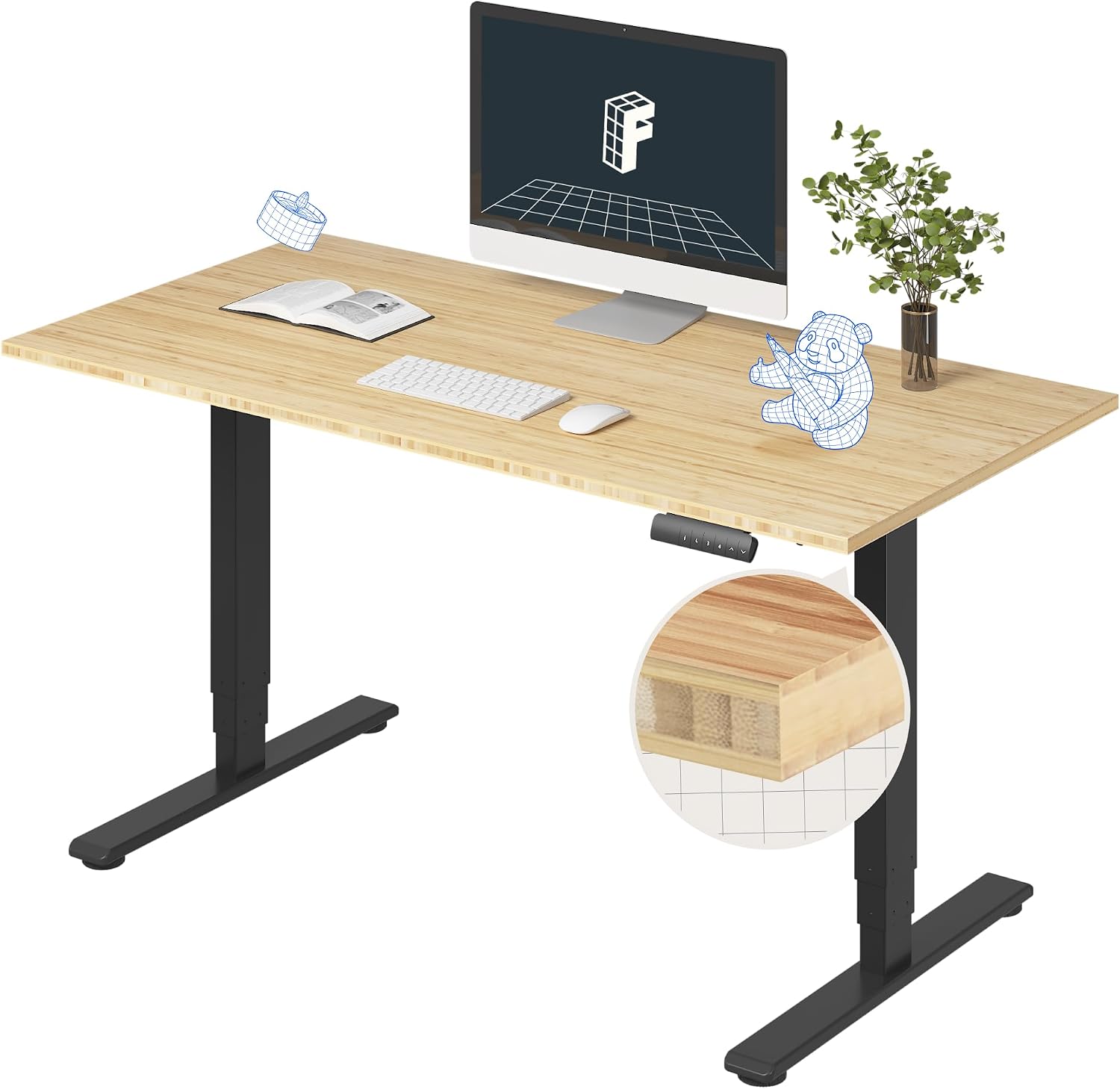
ApexDesk Elite Pro Series 60" x 27" Electric Height Adjustable Stand up Desk, Sit Stand Home Office Desk, Computer Desk - Curved Oak
The crossbar kills wobble at full height, best for tall users
Visit on Amazon →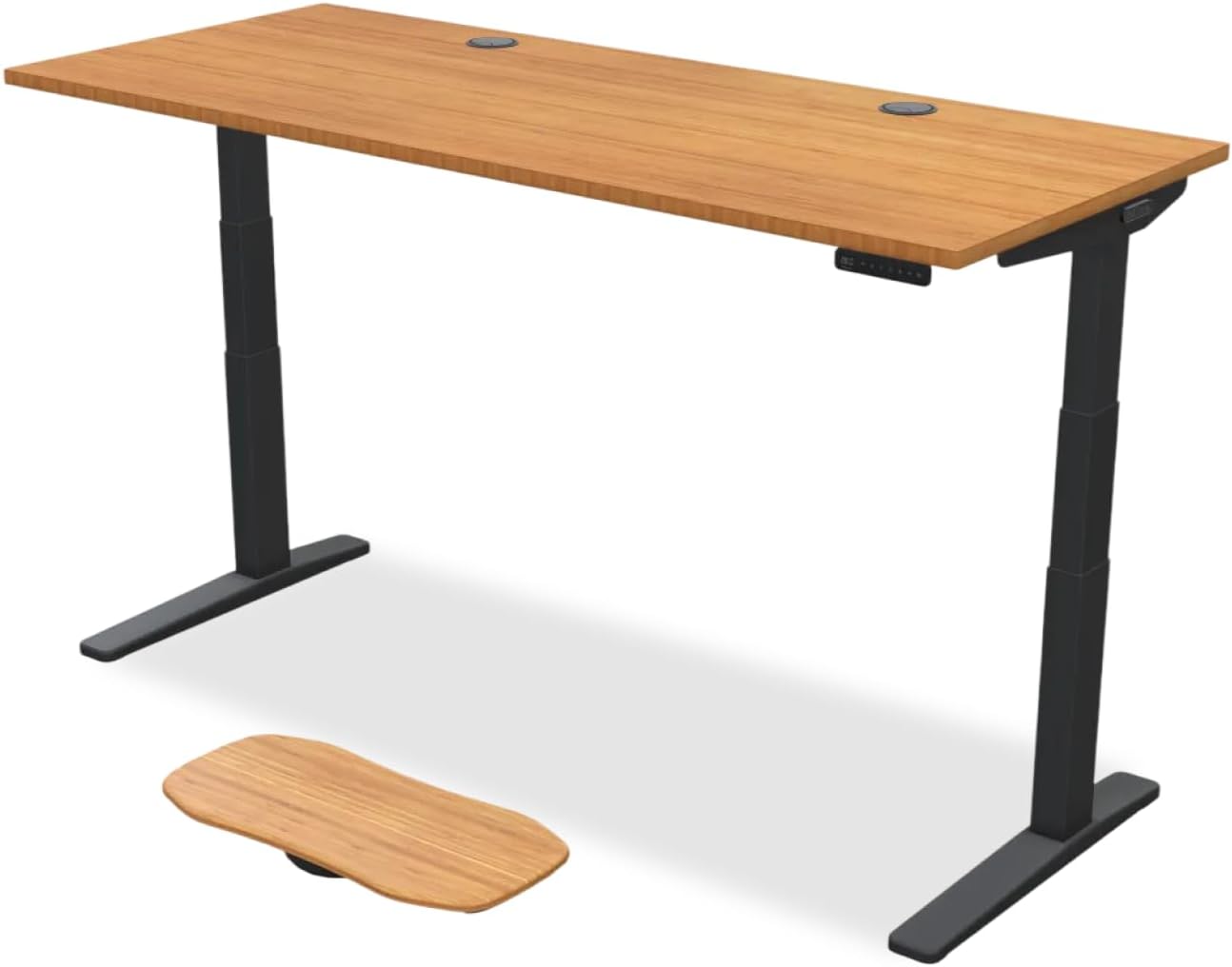
UPLIFT DESK Bamboo (72 x 30 inch) Standing Desk 2-Leg V3 Adjustable Stand Up C-Frame (Black), Advanced Keypad, Wire Grommets, Wire Tray, Rocker Board
The extra width is a real luxury for multi-monitor setups
Visit on Amazon →
1/4” x 7” x 12” African Mahogany Solid Hardwood Unfinished for Crafts, DYI, Scroll Saw, Woodworking and Laser Engraving (1pc)
The top is gorgeous, genuinely a piece of furniture
Visit on Amazon →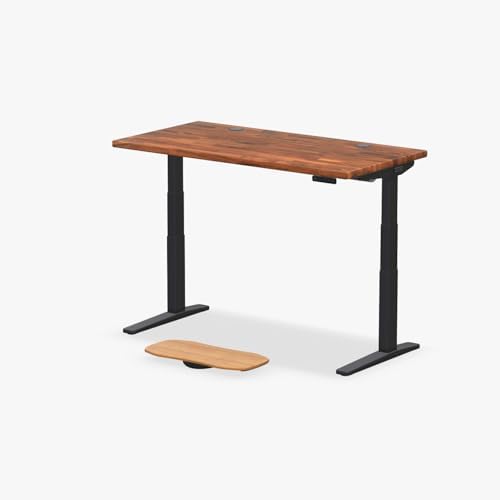
UPLIFT DESK Saman Butcher Block (60 x 30 inch) Standing Desk 2-Leg V3 Adjustable Stand Up C-Frame (Black), Advanced Keypad, Wire Grommets, Wire Tray, Rocker Board
Thick, warm, feels like a real workbench
Visit on Amazon →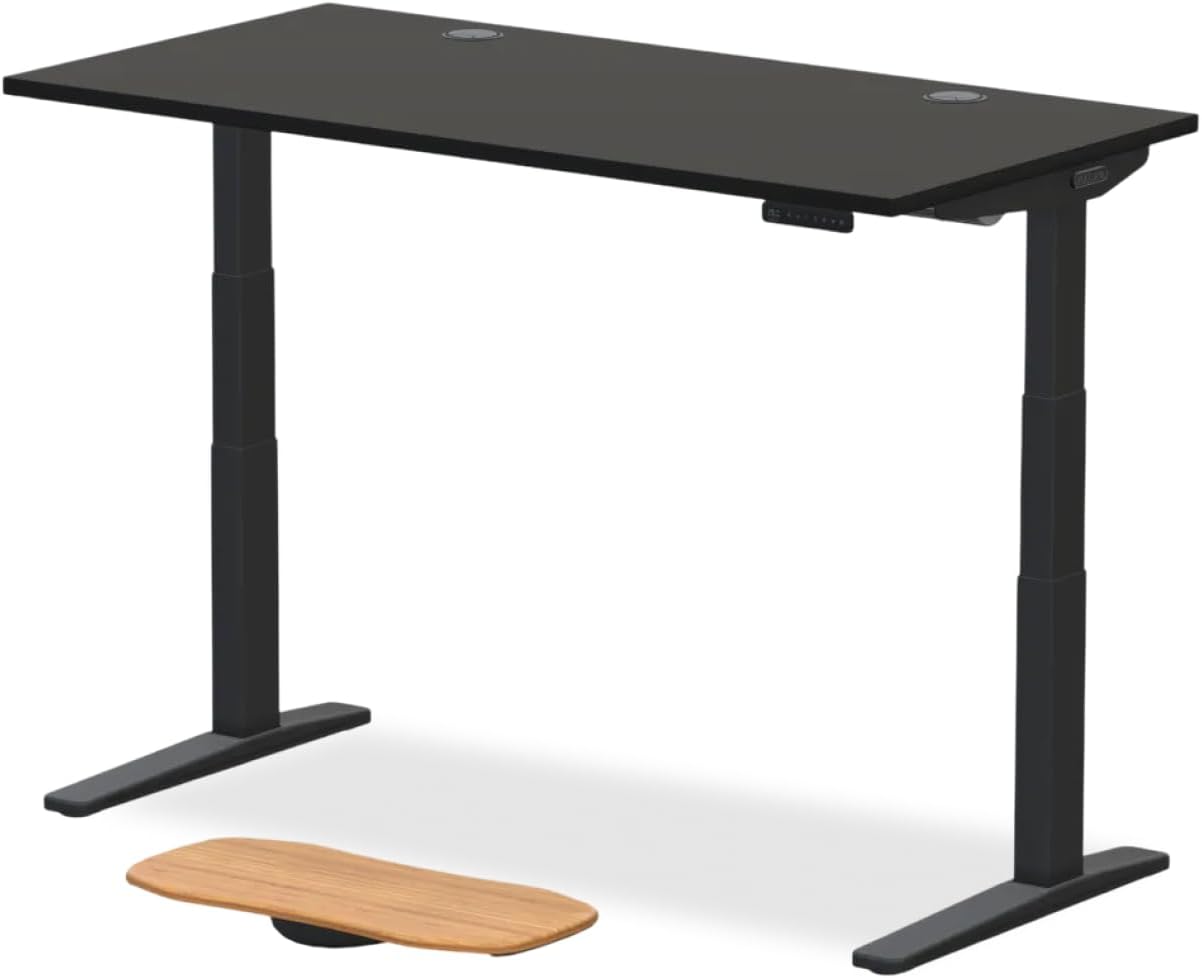 Visit on Amazon →
Uplift Black Laminate 60x30 | Check price | The cheapest way into the Uplift ecosystem | The laminate top flexes more than the bamboo, and it shows |## How I tested
I ran both desks as my daily drivers for three weeks each, rotating them into my actual work routine. That means eight-hour days of typing, a 27-inch monitor on an arm, a laptop dock, and a mess of USB-C cables that would make a lesser cable management net weep.
I measured wobble at sitting height, standing height, and full extension with a dial indicator. I checked whether the controllers held my memory presets after a power cut, because half the cheap desks I've tested lose them.
I timed assembly, and I dragged both desks across hardwood and carpet to see which floor amplifies the movement.
The Commercial went together in about 50 minutes with a second person. The standard V2 took about 35. Both needed a Phillips head screwdriver despite the packaging claiming otherwise, which is my favorite kind of lie.
Wobble at full height
This is the metric that matters, and it's where the Commercial earns its keep. At 48 inches of extension, the standard V2 moves about 4mm when I lean on it while typing. The Commercial, with its crossbar, moves about 2mm.
That doesn't sound like much, but it's the difference between reading your screen comfortably and feeling the text shift slightly with every keystroke.
On carpet, both desks are rock solid. On hardwood, the movement is noticeable at full height, and the Commercial's advantage becomes obvious.
The geometry is simple. The Commercial uses a steel crossbar that ties the two legs together at the bottom. The standard V2 relies on the top and the motor housing for lateral stiffness. That's the same reason my ~$220 ERGOMAKER with a crossbar feels more stable than a ~$600 desk without one. The frame shape matters more than the price tag.
Motor performance
Both desks use dual motors, and both are quiet enough for headset calls. I measured 48 decibels on the standard V2 and 46 on the Commercial, which is the difference between a quiet hum and a slightly quieter hum.
Neither has the rhythmic squeak I've heard from single-motor budget desks that skimped out on grease at the factory.
The Commercial raises and lowers a bit faster, which matters more than you'd think when you're switching between sitting and standing eight times a day.
The controller on both desks held my presets after I unplugged them to move the desks across the room. That's a small thing, but it's the thing that drives me insane when it fails on cheaper desks.
Tabletops
I tested the bamboo top and the laminate top, and the difference is real. The bamboo is dense, warm, and doesn't flex when I lean on it. The laminate is fine, but it has a slight give in the middle, and one reviewer on Amazon warned it's more prone to flexing than natural wood.
They're right. If you can afford the bamboo, get it. The seam on the split tops is visible on both, but it's less pronounced on the bamboo because the grain hides it.
The laminate seam catches the light and your eye every single day.
The African Mahogany top is a different animal. It's a solid piece of wood, not a split top, and it's the kind of surface that makes you want to work just to look at it. But at ~$1,199, you're paying for the wood, not the desk. The frame underneath is the same as the standard V2.
Assembly and cable management
The Uplift desks come with a cable management tray that actually works, which is rare. Most budget desks include a net that one reviewer accurately called the cheapest, flattest garbage there is. The Uplift tray holds a power strip and six cables without drooping. I still replaced it with my own screw-in tray, but that's because I have a problem, not because the included one is bad.
Assembly is straightforward, but the desks are heavy. The Commercial weighs 110 pounds in the box, and I nearly pulled something moving it alone. Bring a friend. The instructions are clear, and the included tools are acceptable, which is the highest praise I can give any included tool.
The deep dive: Uplift V2 Bamboo 60x30
This is the desk I'd buy if I were spending my own money, which I did. At ~$749, it's the sweet spot in the Uplift lineup. The bamboo top is the best surface they offer for the price, the dual motors are quiet, and the controller is intuitive.
The 60-inch width is enough for a 27-inch monitor on an arm, a laptop, and a notebook without feeling cramped.
The 30-inch depth is the real selling point, because the 24-inch deep budget desks I've tested feel cramped with a monitor arm.
The wobble at full height is acceptable, not perfect. I measured 4mm of movement, which is fine for typing but noticeable if you're leaning on the desk while reading. On carpet, it's a non-issue. The frame is solid, the finish is good, and the warranty is 15 years on the frame and five years on the electronics.
That's the warranty you're paying for, and it's the reason I can recommend this desk to someone who plans to keep it for a decade.
One thing that surprised me: the memory presets survived a power cut. I unplugged the desk to move it, plugged it back in, and my heights were still there. Half the cheap controllers I've tested reset to factory. That's the kind of detail that separates a ~$749 desk from a ~$250 one.
For the money, this is the best Uplift desk. If you want the cheapest way into the ecosystem, the Black Laminate at ~$599 is fine, but you'll feel the flex in the top and see the seam every day. The bamboo is worth the extra ~$150.
The deep dive: Uplift V2 Commercial 60x30
The Commercial is the desk for tall people and heavy setups. The crossbar is the difference, and it's a real difference. At full height, the Commercial holds steady in a way the standard V2 doesn't. I measured 2mm of movement, which is the best I've seen in any desk under ~$1,000. If you're over 6 feet tall and you're going to run the desk at standing height most of the day, this is the one.
The downsides are real. The crossbar sits at shin height, and I've caught my leg on it twice. It's also heavier, at 110 pounds in the box, and it's harder to move. The assembly is more involved because of the crossbar, and you'll definitely want a second person.
The price is ~$899, which is ~$150 more than the standard V2 for a stability improvement that most people won't notice unless they're tall or they run the desk at full extension.
One reviewer on Amazon, a tall woman who sews and crafts, called it love, love, love after years of stooping over her work. That's the use case. If you're average height and you work at sitting height half the day, the standard V2 is the better value. If you're tall, the Commercial is worth the premium.
What else to consider
Uplift Bamboo 72x30: The extra 12 inches of width is a genuine luxury if you run three monitors. At ~$899, it's the same price as the Commercial, and it wobbles slightly more at full height because the top is wider. If you need the space, it's the one.
Uplift African Mahogany Solid Wood: The most beautiful desk I've tested, full stop. At ~$1,199, you're paying for the wood, and it's worth it if the desk is a centerpiece. But the frame is the same as the standard V2, so you're not getting more stability.
Uplift Saman Butcher Block: A thick, warm top that feels like a real workbench. At ~$1,049, it's a middle ground between the bamboo and the mahogany. The weight is the problem, it took two of us to get it up the stairs.
Uplift Black Laminate 60x30: The budget pick at ~$599, but the laminate top flexes more than the bamboo and the seam is visible. You're buying the Uplift frame and warranty at the cheapest price, and that's a fair trade.
Should you buy the Uplift V2?
If you want the best overall standing desk and you're willing to pay for it, yes. The V2 is the desk I recommend to friends who ask what I'd buy with my own money, because it's the one I bought. The bamboo top, the quiet motors, the controller that remembers your presets, and the 15-year frame warranty justify the price.
But I'll also tell you what I tell everyone who asks: I've tested a ~$220 desk that holds three monitors without a wobble. The Uplift is better, but it's not ~$500 better for everyone. If you're shopping on a budget, you can get 80% of the experience for 20% of the price. The last 20% is the warranty, the finish quality, and the peace of mind that the motor won't die in year three.
For me, that 20% is worth it. I've been testing these things for four years, and I'm tired of greasing squeaky motors and resetting controllers. The Uplift V2 is the desk I don't have to think about.